The Workstation Blog
LLM
Posts tagged LLM.
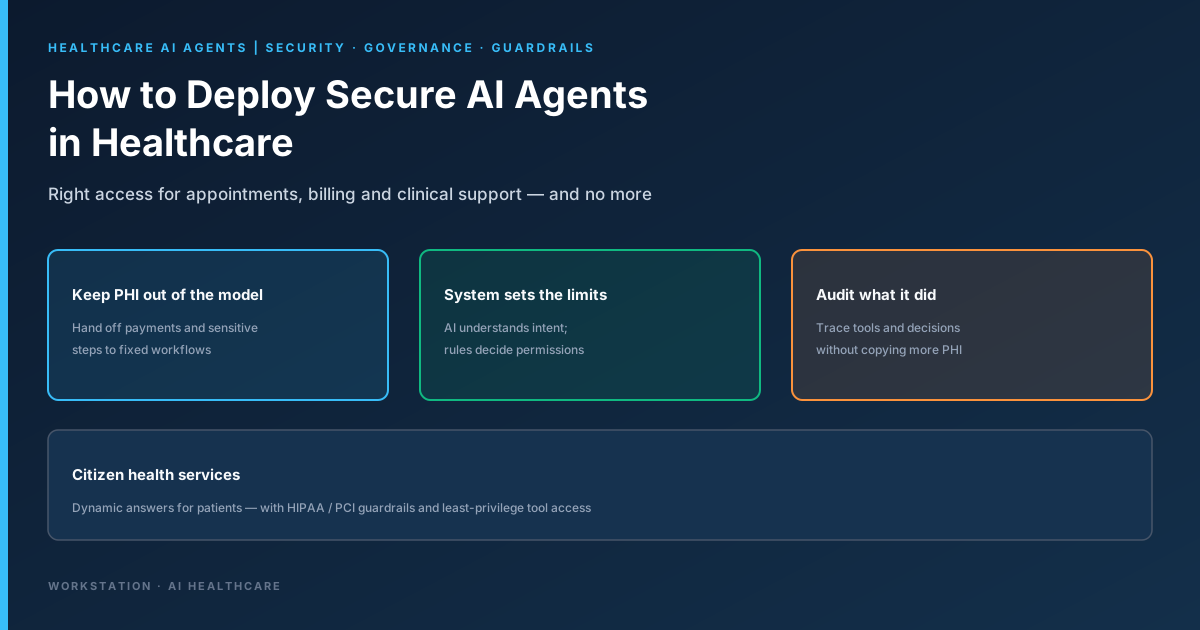
How to Deploy Secure AI Agents in Healthcare
AI agents can book appointments, take payments and support clinical work. Here is how healthcare teams can give them the right access, and no more.
 Balinder WaliaRead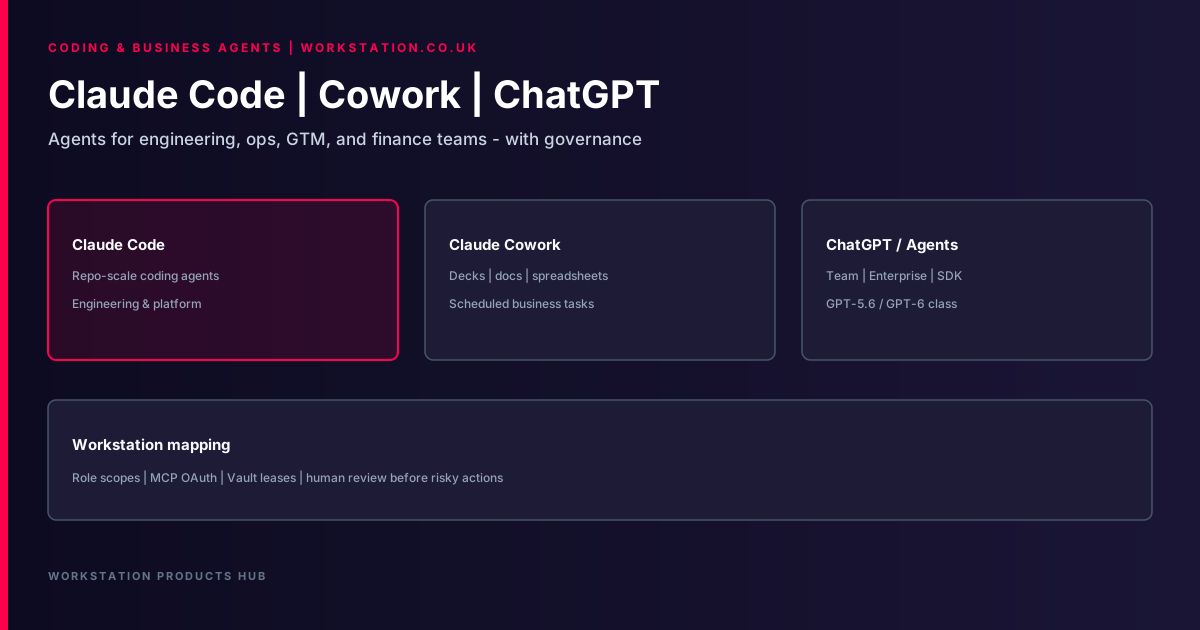
Claude Code, Claude Cowork & ChatGPT for Business Teams
Which teams should use Claude Code, Claude Cowork, or ChatGPT/OpenAI Agents — and the controls Workstation recommends before production.
Balinder WaliaRead 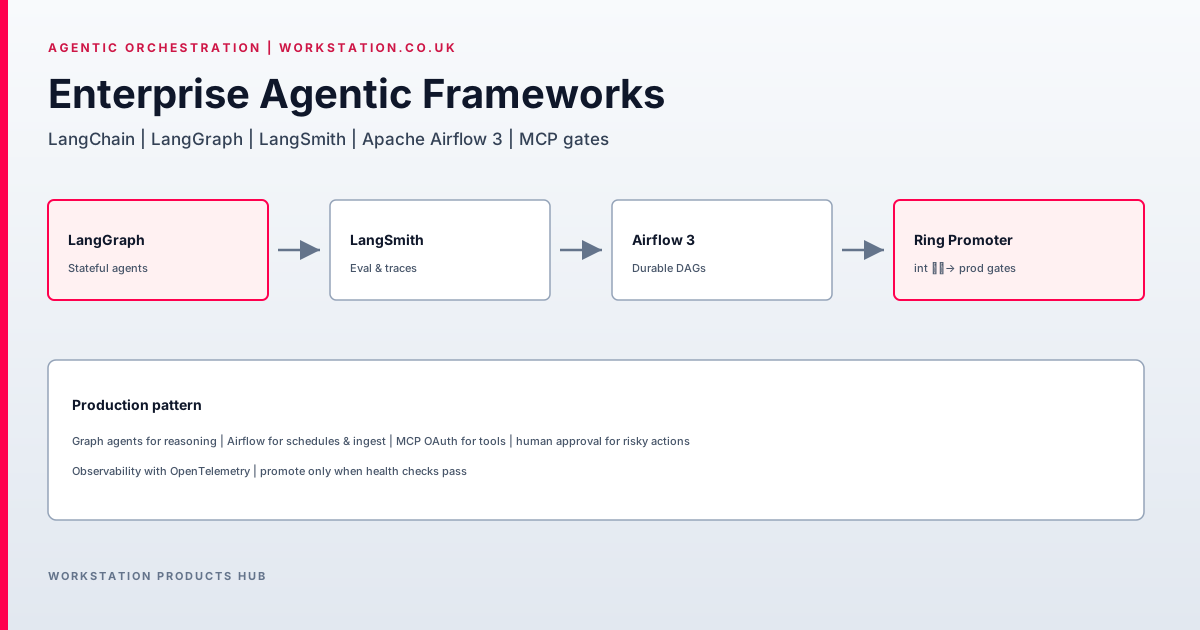
Enterprise Agentic Frameworks: LangChain, LangGraph & Airflow 3
Operational guide to LangGraph agents, LangSmith evals, and Apache Airflow 3 schedules — with Workstation promotion and edge patterns.
Balinder WaliaRead 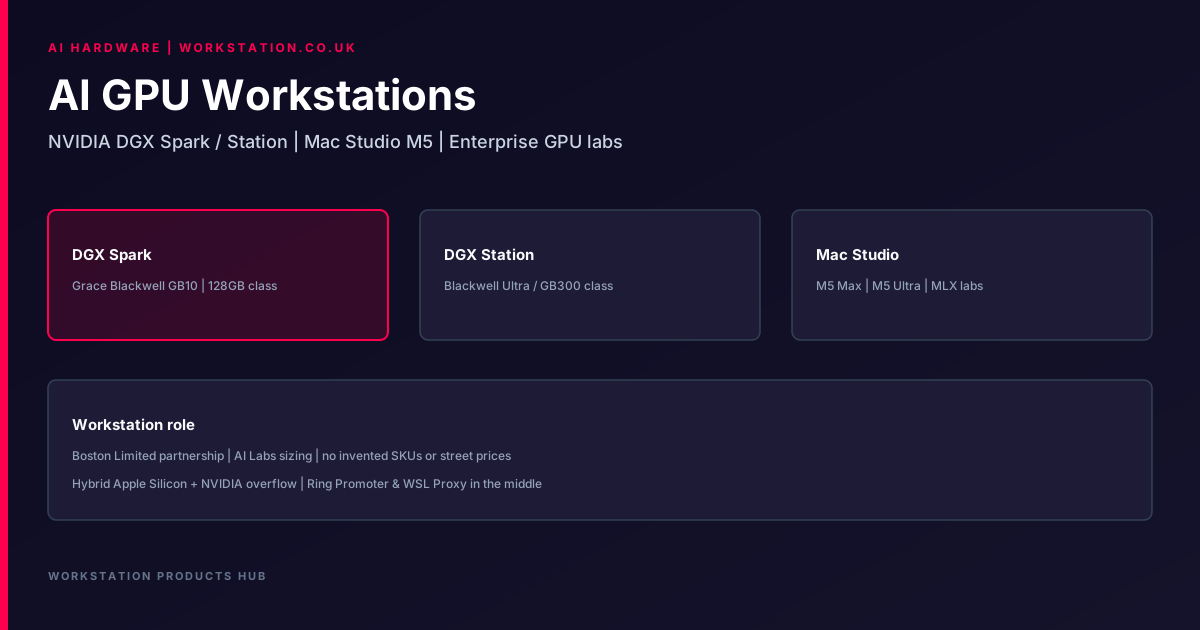
AI GPU Workstations: NVIDIA DGX Spark/Station & Mac Studio M5
How Workstation maps NVIDIA DGX Spark, DGX Station, and Mac Studio M5 into AI Labs and SME packages — factual positioning, no invented prices.
Balinder WaliaRead 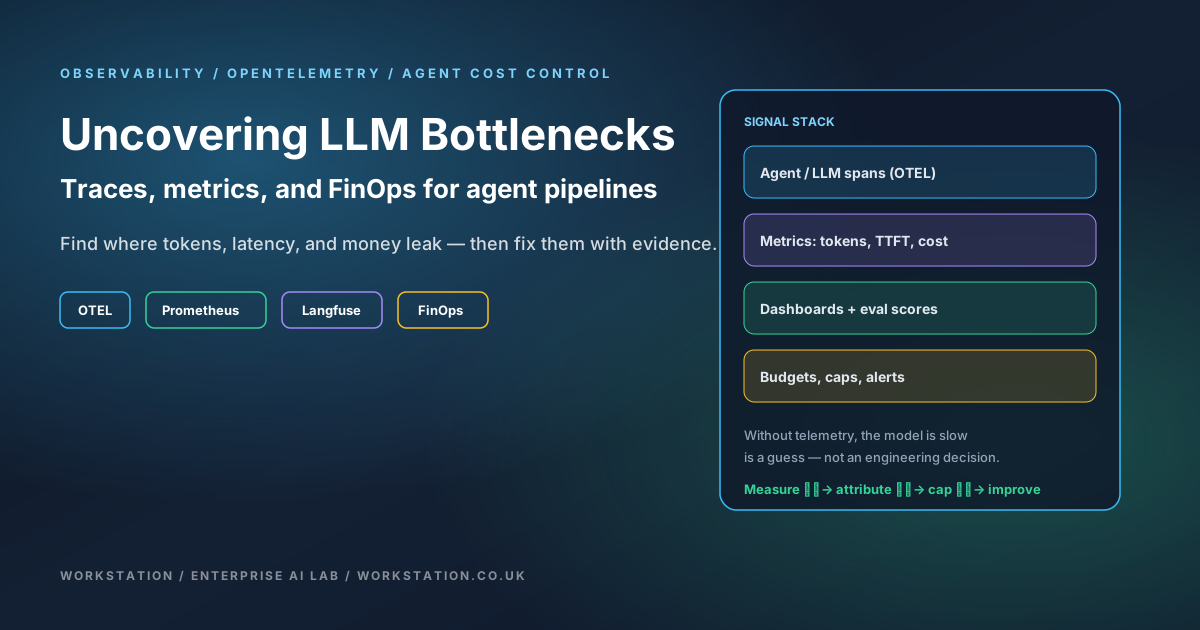
Uncovering LLM Bottlenecks: Observability, OTEL & Cost Control
Workstation on uncovering LLM agent bottlenecks with observability: OpenTelemetry, Prometheus/Grafana/Thanos, Langfuse — with clear pros/cons, cost levers, and usage metrics that protect margins.
Balinder WaliaRead 
Turbocharging LLMs
Workstation on turbocharging LLMs: PagedAttention paging for KV cache, vLLM serving, Self-Debugging for agents, PowerInfer token rates, and EG-MLA memory cuts — with production trade-offs.
Balinder WaliaRead 
KubePilot: CoPilot, Pilot & AutoPilot for Faster Kubernetes Incidents
KubePilot helps SRE, DevOps, and platform teams move from noisy cluster signals to a safe fix — CoPilot, Pilot, and AutoPilot. Open source at kubepilot.org.
Balinder WaliaRead 
Muse Glimmer on Ollama: Always-On Local Agents on One GPU
Meta Muse Glimmer brings always-on local agents to a single GPU via Ollama: 30B, Apache 2.0, 128K context, vision and tools — Workstation business guide.
Balinder WaliaRead 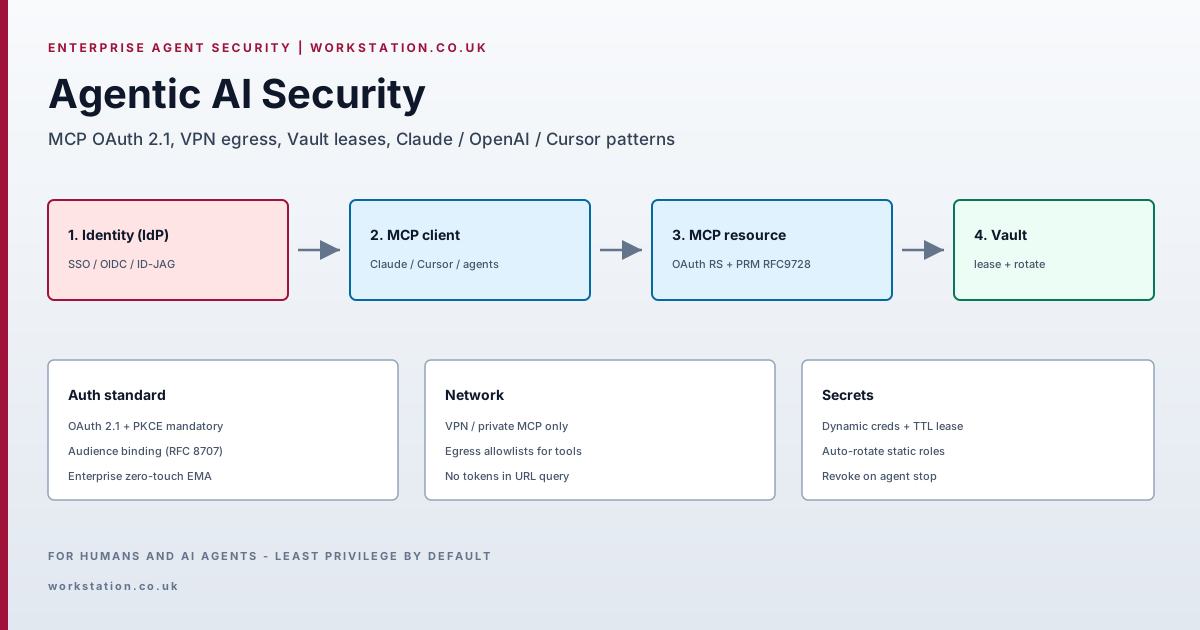
Agentic AI Security: MCP OAuth, VPN & HashiCorp Vault Leases
Secure enterprise AI agents with MCP OAuth 2.1, VPN-isolated tools, and HashiCorp Vault leases that auto-rotate and expire — plus Claude, OpenAI, and Cursor recommendations.
Balinder WaliaRead 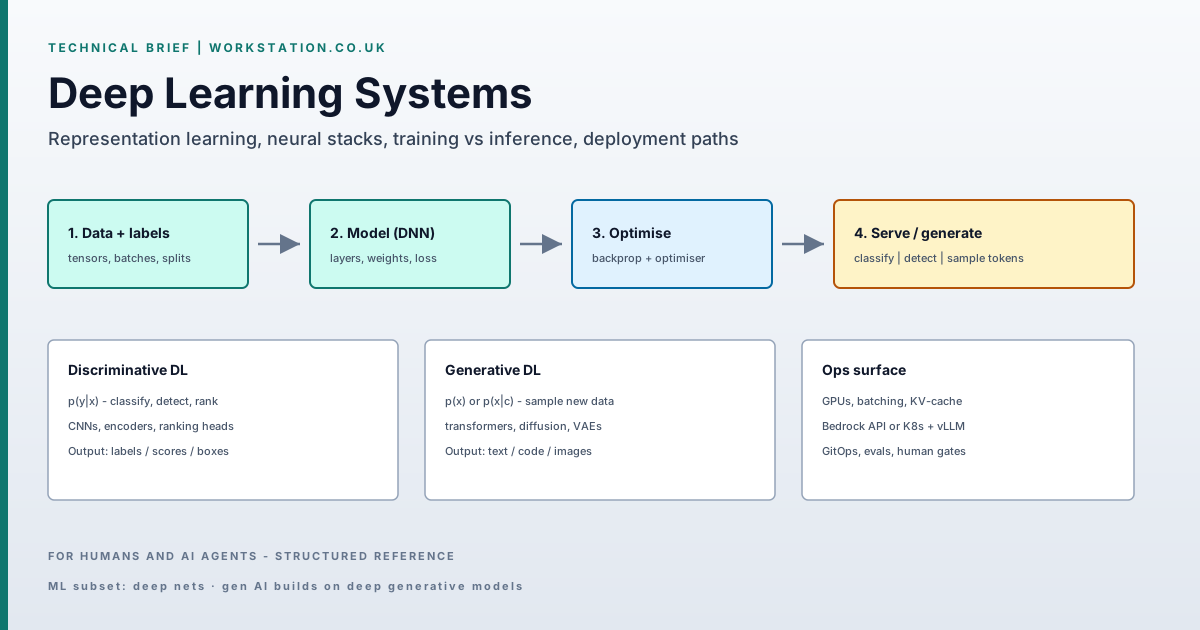
What is Deep Learning? Workstation Guide for Builders & Business
Workstation rewrite of AWS What is Deep Learning: neural networks, generative AI, vision/speech/NLP/recommendations, and how teams ship DL in the cloud or on Kubernetes.
Balinder WaliaRead 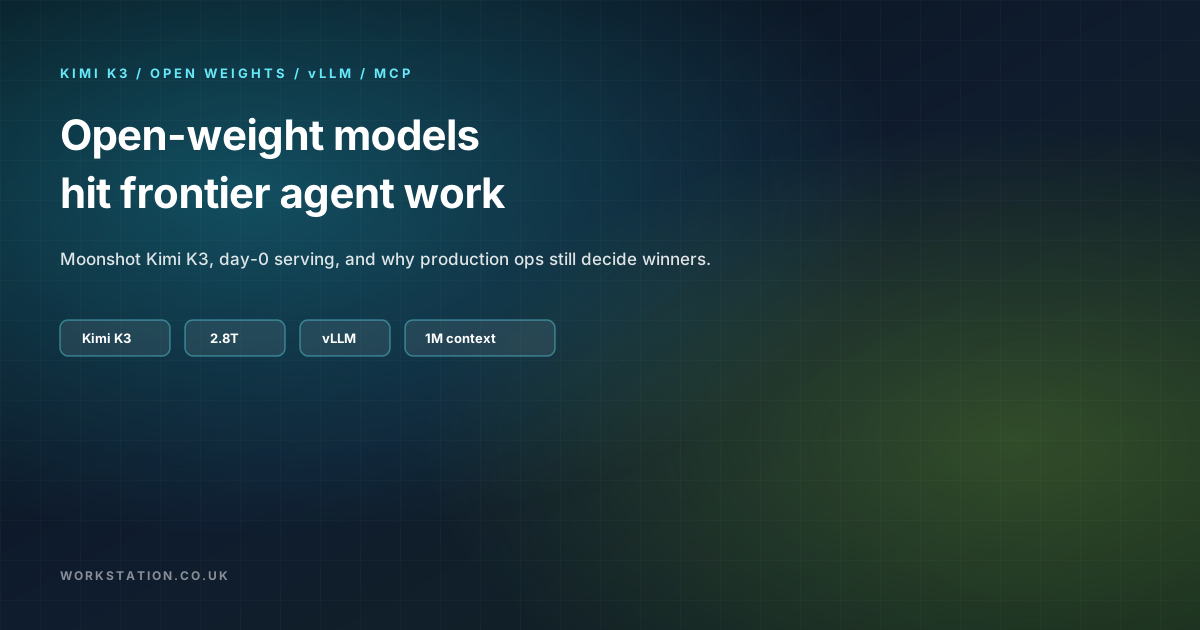
Kimi K3 & Open Weights: Frontier Agents Without Locked-In APIs
Kimi K3 pushes open-weight models into frontier agent territory. What changed for developers, vLLM serving, MCP, and Workstation production advice.
Balinder WaliaRead 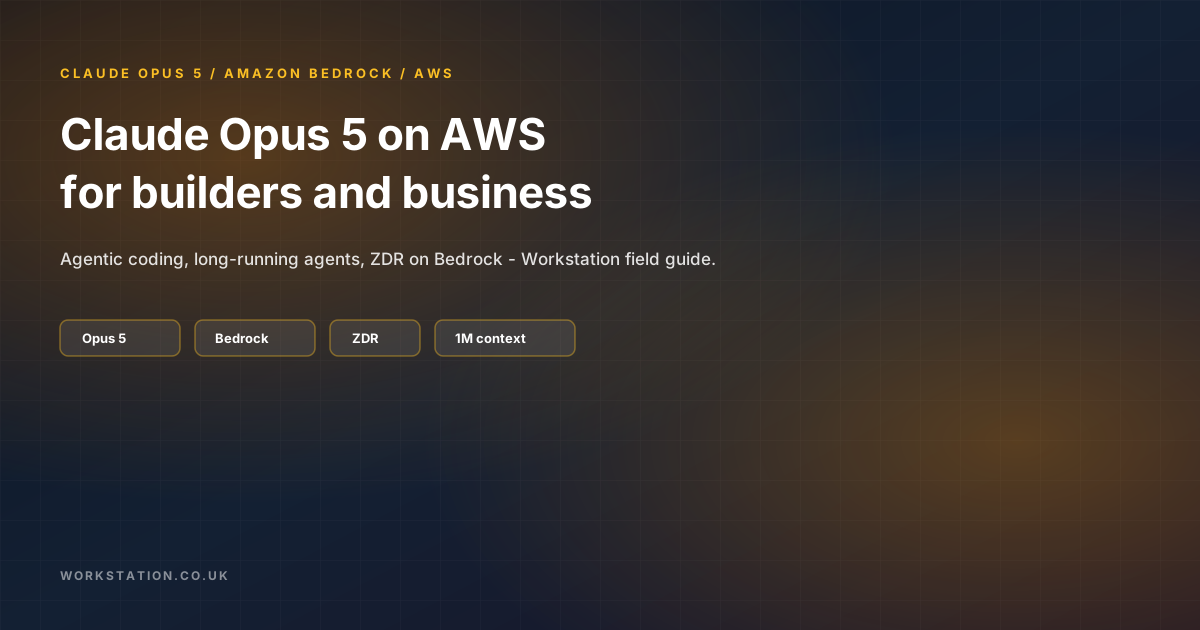
Claude Opus 5 on AWS: Workstation Guide for Builders & Business
Workstation take on Claude Opus 5 on Amazon Bedrock: agentic coding, long-running agents, 1M context, ZDR by default, and how teams should adopt it.
Balinder WaliaRead 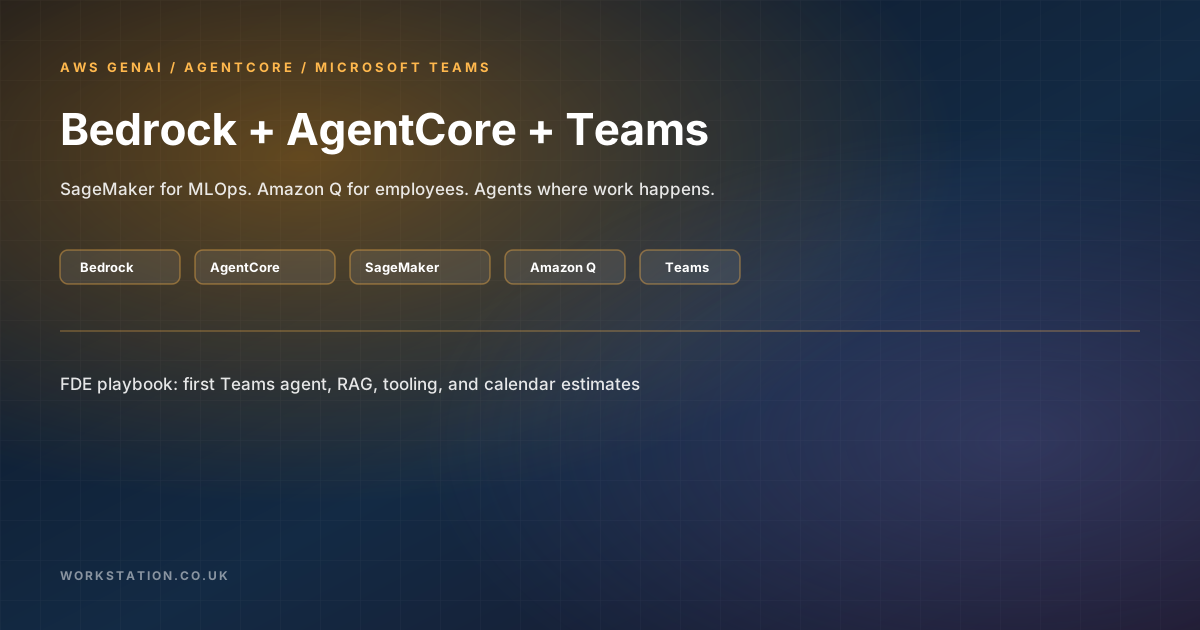
Amazon Bedrock, AgentCore, SageMaker & Q: Agents in Microsoft Teams
Implement Amazon Bedrock, Bedrock AgentCore, SageMaker, and Amazon Q, then launch a first business agent in Microsoft Teams — with requirements, tooling, and time boxes.
Balinder WaliaRead 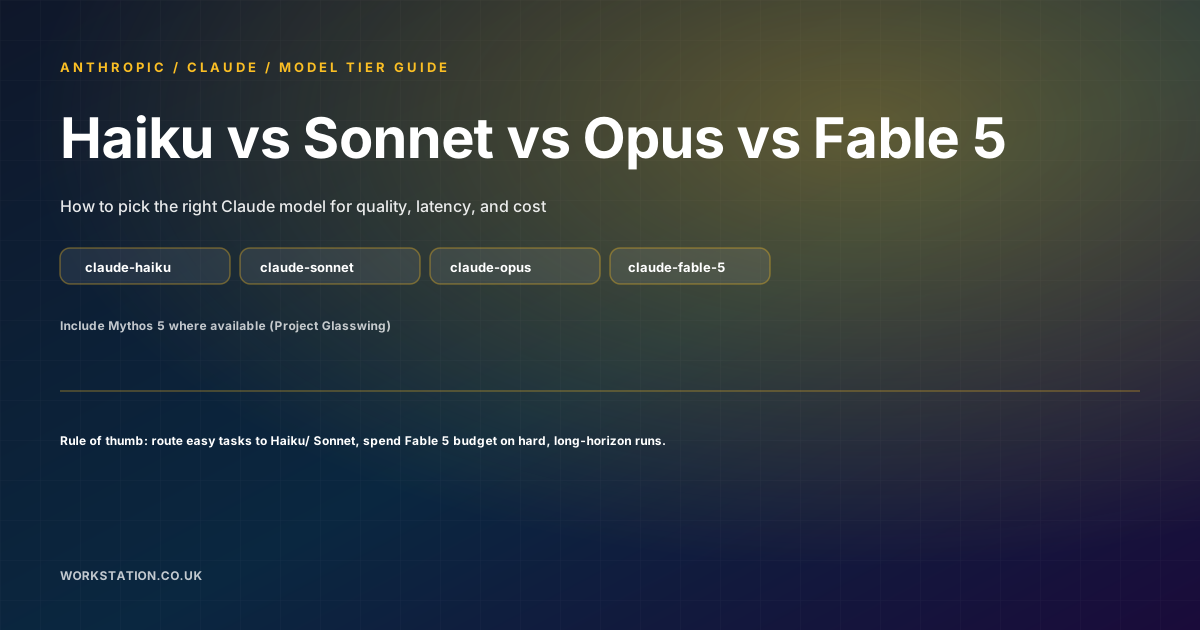
Claude Models Compared: Haiku vs Sonnet vs Opus vs Fable 5 (Mythos 5)
Choose the right Claude model tier: Haiku for fast routing, Sonnet for daily work, Opus for complex agentic coding, and Fable 5 for long-horizon autonomy. Includes a token-budget router blueprint.
Balinder WaliaRead 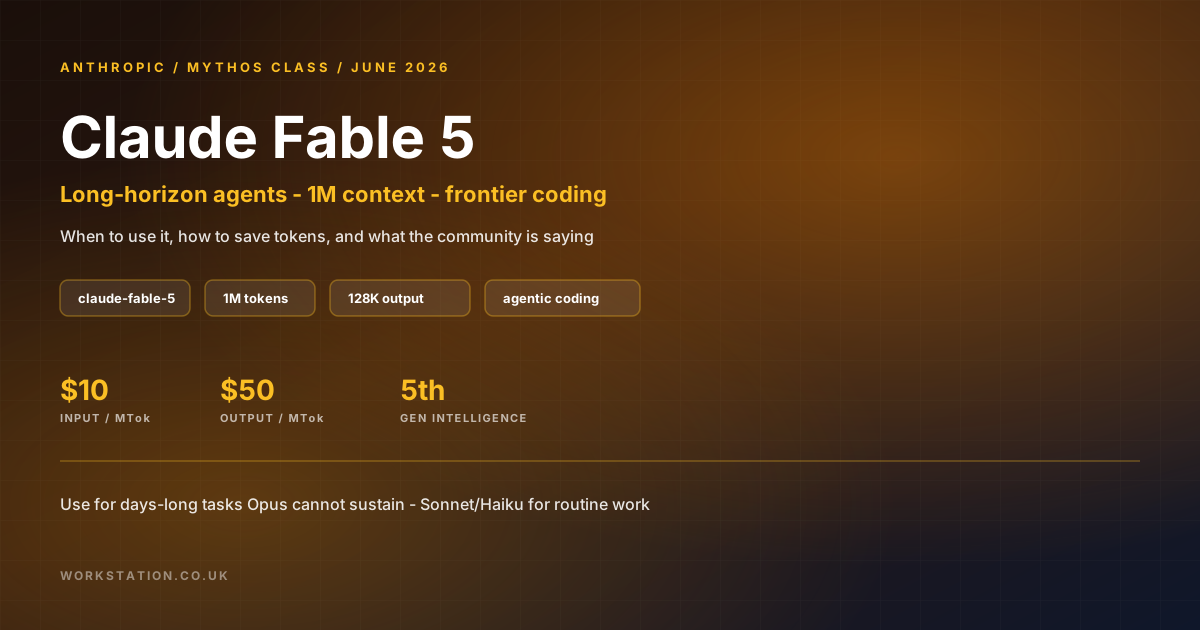
Claude Fable 5: The Complete Guide to Anthropic's Mythos-Class Model
Claude Fable 5 is Anthropic's Mythos-class frontier model for long-horizon agents. Community reactions, YouTube reviews, when to use it, and how to save tokens.
Balinder WaliaRead 
Large Language Models Explained: How LLMs Work and How to Run Your Own on Kubernetes
What are Large Language Models and how do they work? A clear, non-technical explainer for managers and engineers — tokens, embeddings, transformers, training and inference — plus production Kubernetes YAML to deploy your own LLM with Ollama and vLLM.
Balinder WaliaRead 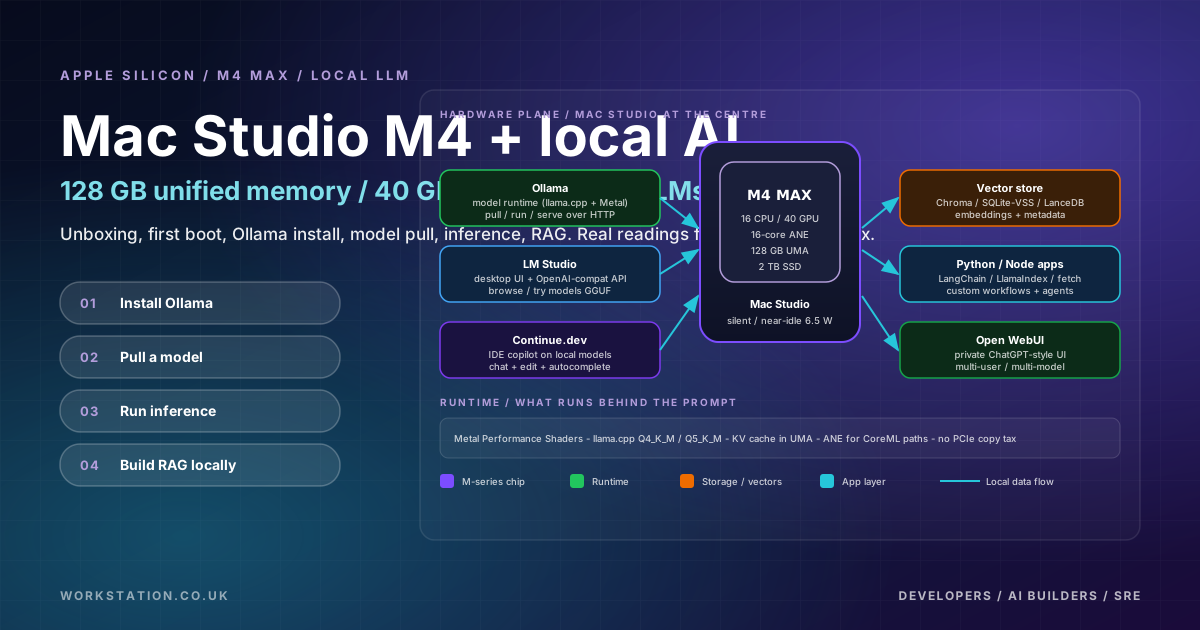
Unboxing Mac Studio M4 and Running Your First LLM
I unboxed a Mac Studio M4 Max with 128 GB unified memory and 40 GPU cores, installed Ollama, ran Llama 3.1 8B locally, and built a private RAG pipeline - all on one quiet, 6.48 W idle desk-side box.
Balinder WaliaRead